
It’s hard to
tell which SE candidates will actually perform in the role.
Without a shared standard, hiring feedback becomes difficult to compare and harder to trust.
See how your current process compares to a structured scorecard.
When SE hiring starts to feel harder than it should
At first, everything looks fine. Candidates are coming in, interviews are happening, and feedback feels thoughtful.
But over time, patterns start to appear:


Why this happens
Solutions Engineers are unusually difficult to evaluate. Success isn’t one skill — it’s a combination of technical capability, commercial judgement, and performance in real customer situations.
Most PreSales leaders understand this instinctively. But that judgement rarely becomes something the whole hiring team can consistently apply.
So instead:
The PreSales Scorecard
What's missing isn't more interviews. It's a shared way to evaluate candidates.
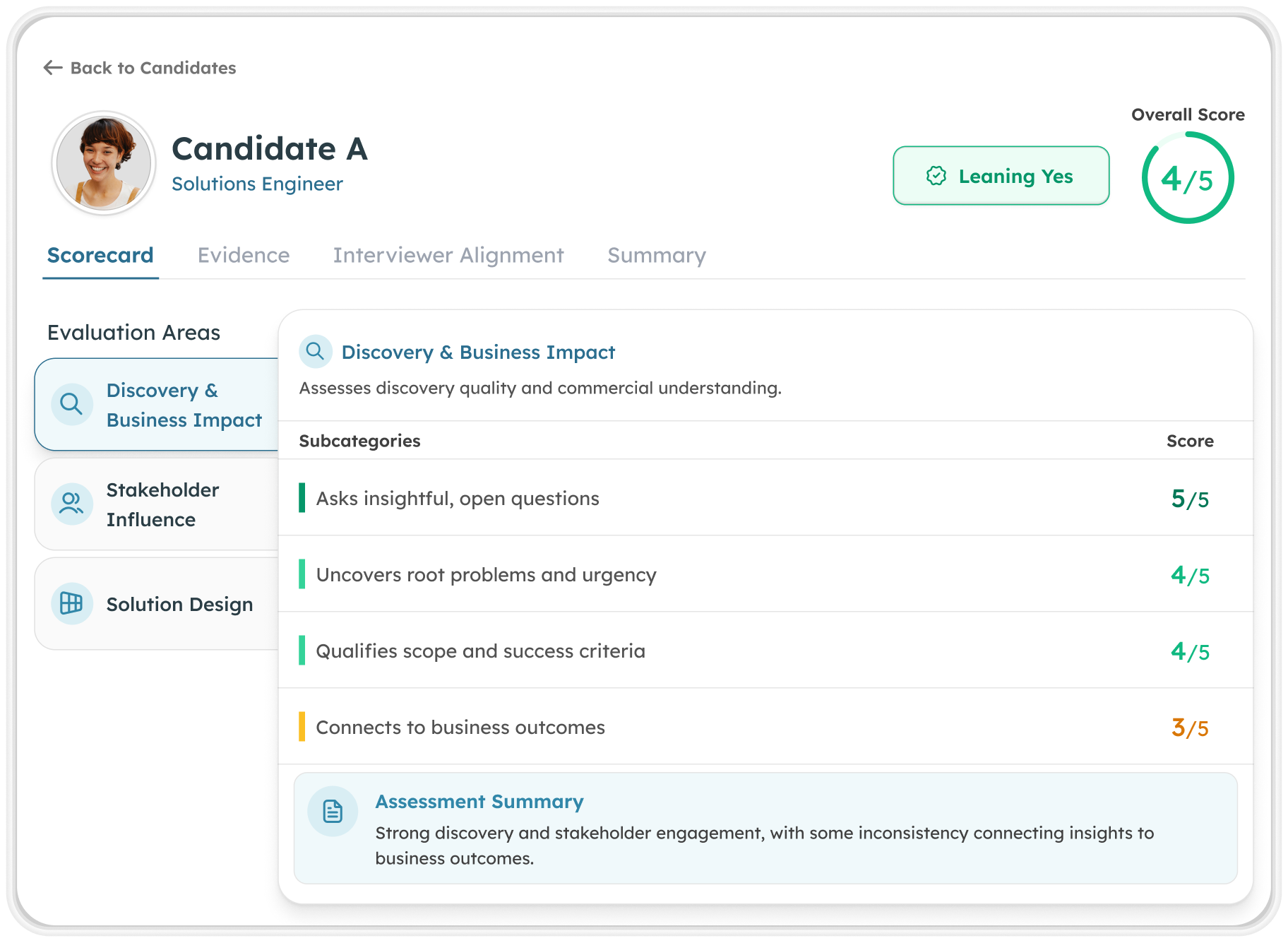
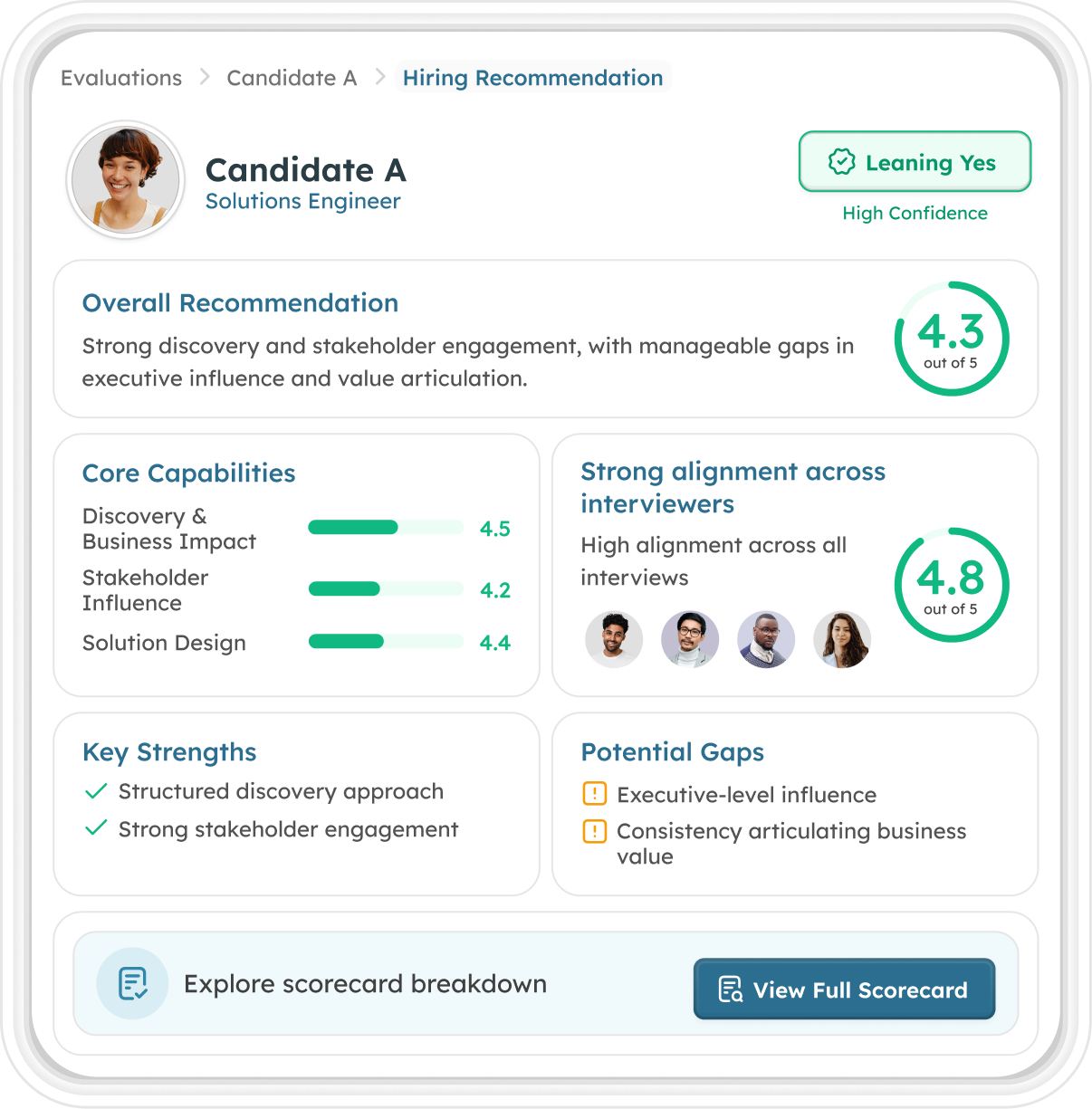
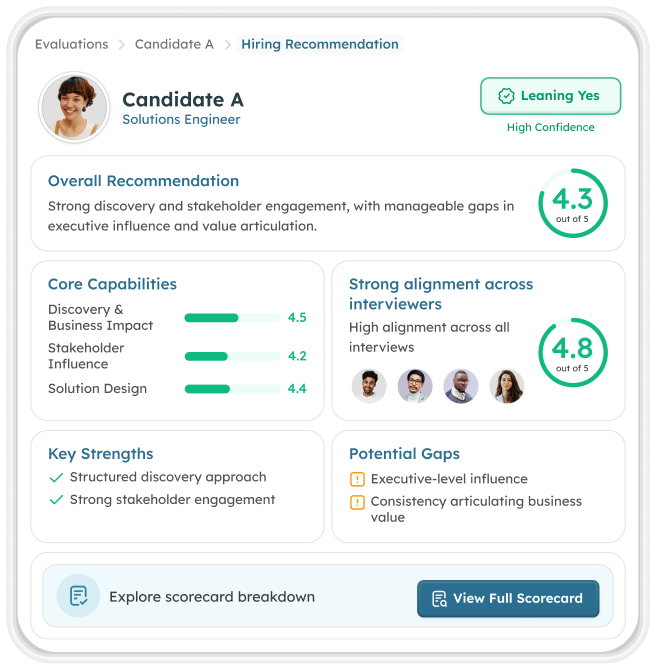
The PreSales Scorecard gives your team a clear, consistent way to assess every candidate — from first conversation to final decision.
Defined capabilities
Every interviewer evaluates against the same criteria — no more guesswork.
Standardised scoring
Candidates are scored consistently, making feedback easy to compare.
Comparable evidence
Consistent feedback across interviews, so decisions are based on evidence, not interpretation.
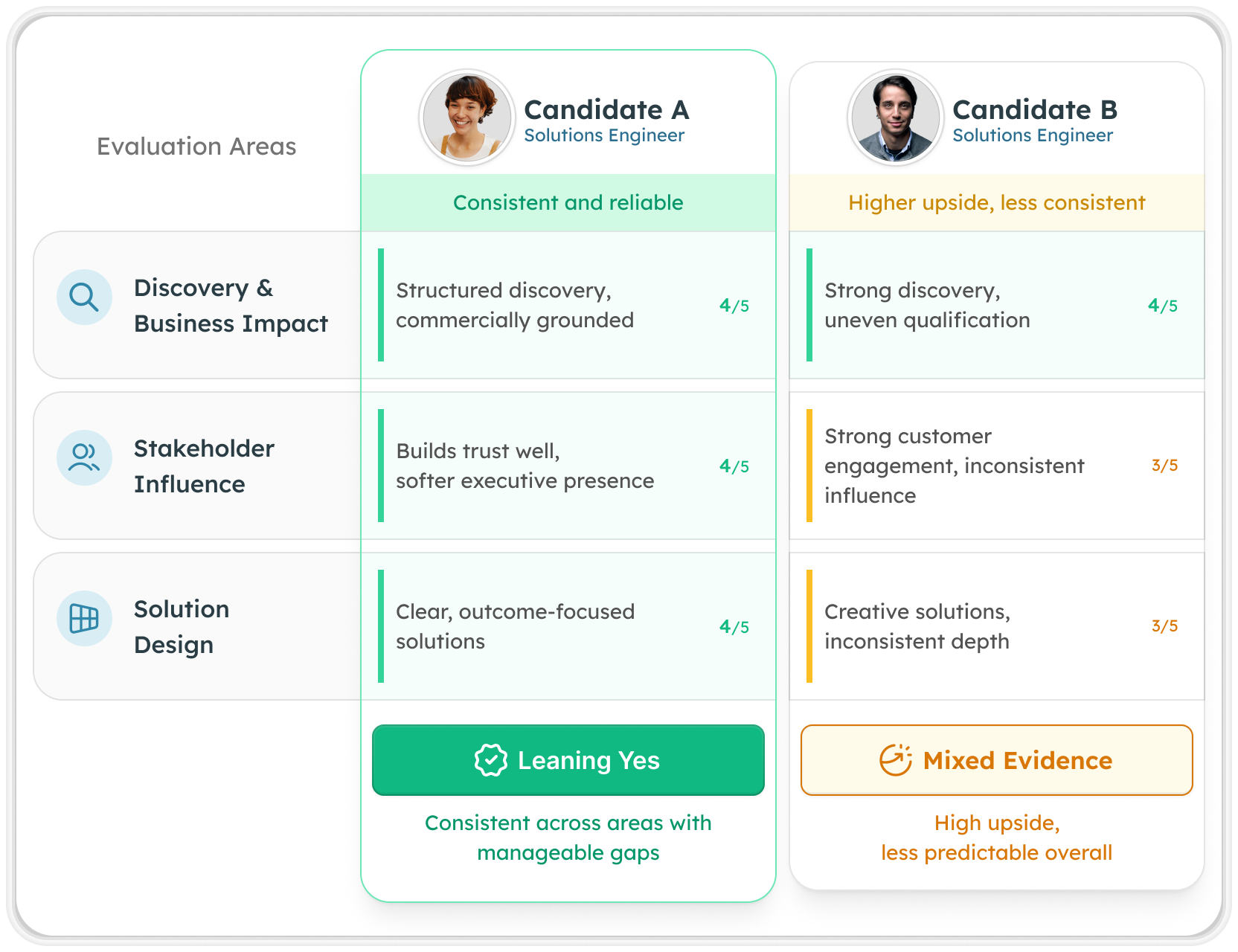
What changes with a Scorecard
A shared standard changes how decisions are made.
Traditional Interview Process
Decisions depend on individual judgement.
Interviews are fragmented
Feedback is subjective
Decisions rely on interpretation
With The PreSales Scorecard
Decisions are grounded in shared evidence.
Interviews are structured
Feedback is comparable
Decisions are based on clear evidence
How it works
We turn your hiring process into a clear, structured evaluation system:
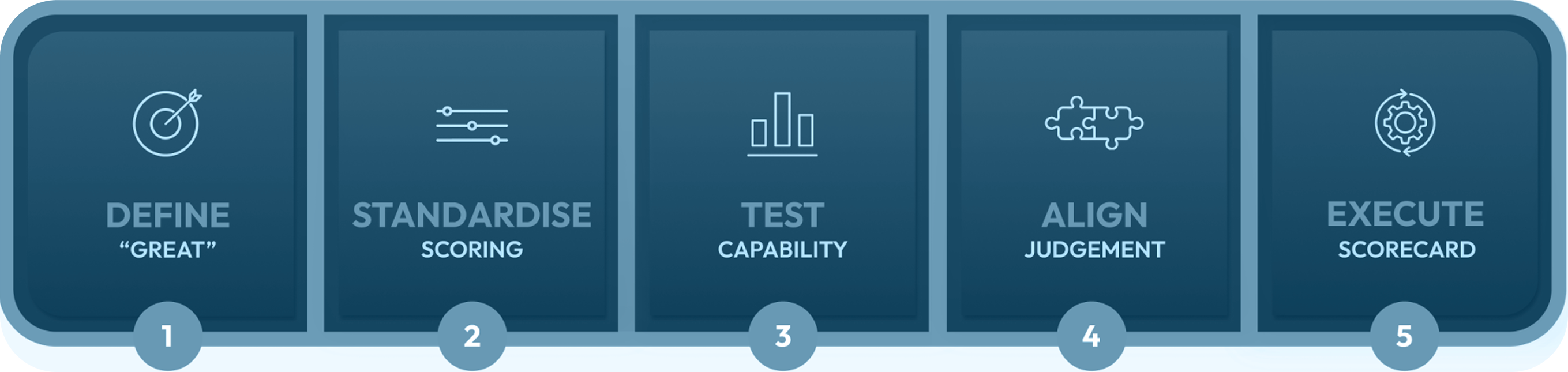
A shared definition of strong performance
Consistent evaluation across interviewers
Interviews designed around real performance
Decisions based on comparable evidence
Every candidate assessed consistently
- A shared definition of strong performance
- Consistent evaluation across interviewers
- Interviews designed around real performance
- Decisions based on comparable evidence
- Every candidate assessed consistently
What this improves
Hiring decisions become clearer — and easier to trust.
Faster hiring
Without losing strong candidates mid-process.
Better decisions
Based on evidence, not instinct or interpretation.
Alignment across interviewers
Everyone evaluates against the same criteria.
Fewer late-stage surprises
Reduce the risk of costly mis-hires.
Why this matters
Solutions Engineers play a critical role in enterprise sales — leading discovery, helping customers understand their problems, and supporting AEs in winning complex deals.
When hiring doesn’t reliably identify who will perform in the role, the impact shows up quickly:

When to use this
You’re hiring for
a critical SE role
Define what strong performance looks like before interviews begin.
Multiple stakeholders are
involved in hiring decisions
Create a shared evaluation framework across the interview process.
You’ve made hires that didn’t perform as expected
Identify where evaluation gaps exist and improve future hiring decisions.
If hiring an SE feels slower or harder than it should — this conversation is a good place to start.
How your team currently evaluates candidates
Where decisions become unclear or slow down
What's creating inconsistency across interviews
We’ll show you where your hiring process is working, where decisions slow down, and whether a structured scorecard would help.

© 2026 Craft Technology Recruitment Ltd. All rights reserved.